
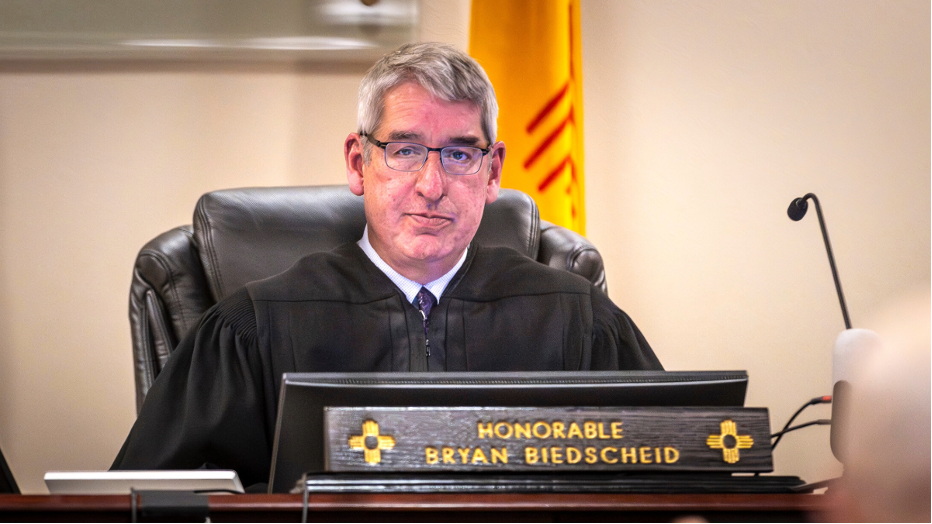
Meta, public nuisance and the order to pay $567,000,000
How was a court able to require Meta to set up a $567 million Abatement Fund to clear up its products? On 6 August 2026, a court in New Mexico found that Meta’s activities constituted a public nuisance and ordered the fund to address harms arising from its platforms. This article examines how the court reached that conclusion and the unusual remedy that followed. Read it below.
‘Sensitive’ land use, nuisance and negligence: what has the Court of Appeal recently said about the coherence of the common law
What are the circumstances in which a defendant can resist liability in nuisance on the basis that the claimant is engaged in a particular delicate or sensitive trade?
Why property and environmental law practitioners should be interested in a recent slip/trip judgment from the Court of Appeal.
Why property and environmental law practitioners should be interested in a recent slip/trip judgment from the Court of Appeal.
Do the principles of the rule in Rylands v. Fletcher really need revising?
The Court of Appeal which heard Nicholas v. Thomas in February is still deliberating the consequences of Fearn v. Tate Gallery Trustees on the law of nuisance, but, pending this important decision, there are two cases of some interest which are worth considering.
Sensitivity and foreseeability in private nuisance: where are we today?
The relationship between ‘hypersensitive’ land uses and foreseeability in private nuisance has become increasingly unclear. This article revisits the leading authorities, from Robinson v Kilvert to Fearn, to examine how the traditional cases sit alongside the modern emphasis on foreseeability.

Environmental regulation: call for evidence
Parliament’s Public Accounts Committee has issued a call for evidence on environmental regulation. This note outlines the focus of the enquiry and identifies issues of practical relevance to those involved in environmental permitting. My submission is also included as well as links on how to apply.
![Andrews v. Kronospan Ltd [2025] EWHC 2429 (TCC)](https://wiglaw.co.uk/wp-content/uploads/2025/12/Kronospan.jpeg)
Andrews v. Kronospan Ltd [2025] EWHC 2429 (TCC)
Private Nuisance and ‘Intangible’ Interferences – Nuisance Threshold – Dust Nuisance – Assessing Future Risks from Clients and the Judge – The Utility of Expert Evidence

Update on the new law on private nuisance: how is it being applied?
It is worth looking at how the law on private nuisance is being applied following the Supreme Court’s pronouncement in 2023 in Fearn v. Tate Gallery

Rights to light; private nuisance; injunctions and damages in lieu – new law after Lawrence v. Fen Tigers (2014) and One-Step (Support) Ltd v. Morris-Garner (2018)
Rights to light; private nuisance; injunctions and damages in lieu – new law after Lawrence v. Fen Tigers (2014) and One-Step (Support) Ltd v. Morris-Garner (2018)

Private nuisance – assessing compensation in amenity cases – what do Irish authorities tell us?
How should general damages be assessed in cases of ‘sensible personal discomfort’? Irish authorities in respect of noise nuisance from windfarms have become extremely sophisticated and raise the question whether revision is needed to the approach in England & Wales, especially following Fearn v. Tate Gallery Trustees.