
How was a Court able to require Meta to set up an Abatement Fund to clear up its products?
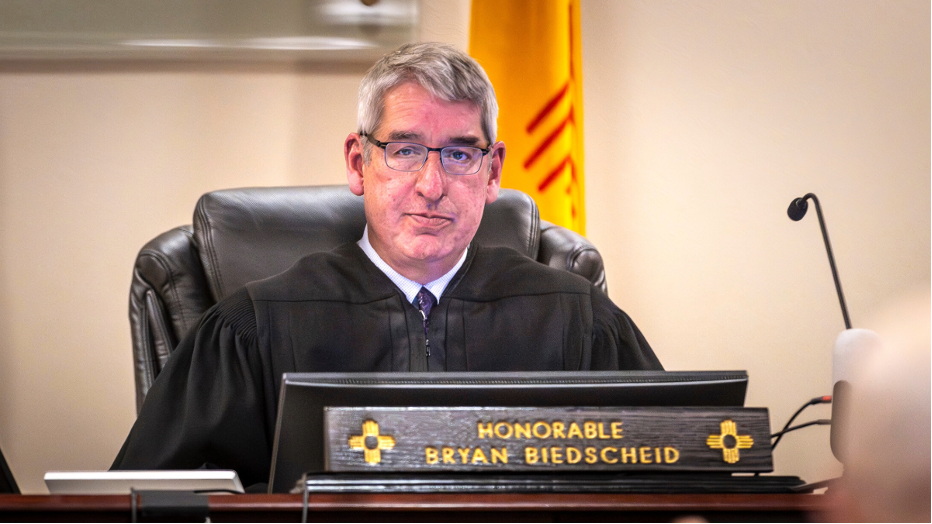
On 6 August 2026, a judge issued his 67-page ruling in a claim brought by the State of New Mexico in which he ordered Meta to deposit $567m into an Abatement Fund. He granted no other remedy, but decided that the equitable jurisdiction of the court meant that it was necessary for a mandatory injunction to be issued to establish the fund.
In his judgment, the Hon Bryan Biedscheid stated that:
“Meta’s platforms provide a valuable service and value to many New Mexicans. Nonetheless, the Court must strive to abate the public nuisance—which has resulted in adolescent mental health harms and sexual exploitation—without rendering Meta’s entire platforms non-competitive or unfeasible.”
The matter came before the court under Phase 2 of a two phase trial, Phase 1 having been a jury trial in which the jury ordered Meta to pay a separate $375m in penalties for breaches of the State’s Unfair Practices Claims.
As to the application of the tort of public nuisance, it is very difficult to improve on the judge’s own words (the context being Meta’s plea that its commercial enterprises should not be frustrated):
“Meta helpfully analogized to a polluting factory in order to argue the limitations on equitable relief that can be granted by this Court. Essentially, Meta argued that, if a factory was emitting pollution into the air and that a community was being harmed thereby, the appropriate abatement measure is one which requires the factory to stop the emissions and cure the existing harm. This limitation was contrasted with inappropriate abatement measures, such as ordering the closure or demolition of the factory, enjoining or obstructing the production function of the factory, or requiring the factory owner to treat community health issues that are not causally related to the factory’s emissions well into the future. … Finally, Meta argued that the Court must consider rights common to the public, as opposed to more isolated private rights, in determining whether a public nuisance exists, rather than numerous potential individual injury claims. This Court agrees with Meta’s argument and applies both the polluting factory analogy and the public right element to its analysis of this case. … Applying the factory analogy and the public right element to the present case, the Court finds and concludes … that the effects of Meta’s activities constitute a public nuisance such that abatement is an appropriate remedy. The Court considers Meta’s platforms to be analogous to the factory, the advertising and other content displayed on those platforms to be what is produced by the factory, and the psychological harm to and sexual exploitation of children to be the pollution that must be abated. With regard to the public right element, the Court finds and concludes that, just as noxious pollution produced by the factory can harm the common public right to reasonably clean air, the harmful effects of Meta’s platforms on children do not stay contained by its platforms and, instead, migrate to the internet as a whole and, perhaps most concerning, to the real world and create a common, societal burden on and harm to the affected children and their families and schools, as well as hospitals and law enforcement.”
In New Mexico, actions in public nuisance are allowed at common law and under the NM Statutes Annotated 1978. As to the latter, a public nuisance is defined as something injurious to public health, safety, morals or welfare, or something which interferes with the exercise and enjoyment of public rights, including the right to use public property. The nuisance must apply to “a considerable number of people or an entire community or neighbourhood”.
The judge found that Meta’s platforms cause harms that significantly interfere with public safety, public peace and public comfort, harms which are of a “continuing and long-lasting nature … harms [which] negatively impact public spaces, functions and institutions, including public schools, hospitals and law enforcement”.
The Abatement Fund had five components to which contributions were apportioned: awareness and prevention ($33m), screening and assessment ($90m), referral and coordination ($15m), treatment ($420m) and implementation, continuous quality improvement and evaluation ($9m).
Could the result be achieved in England and Wales?
In his disparaging article Public Nuisance – A Critical Examination [1989] CLJ 55, frequently given an outing in the higher courts, J.R. Spencer wrote that “If we abolished civil liability for damages for public nuisance the law of tort would be no less fair, and clearer and simpler as a result”. This has been the persistent approach of academics, and the tort has not much appealed to the judiciary.
In other jurisdictions, public nuisance is being used as the basis for claims about climate change, and is being used here, tentatively, in the context of river and sea bathing. The order in the Meta case might not happen here today, but this, surely, is only because the changing usages of mankind have not been recognised and accommodated. Or as anyone familiar with The Odyssey, if not House of Lords speeches, might appreciate, its protean shape has not been acknowledged.